The Invisible Gaps in Ecosystem
To eliminate operational gaps and enable intelligent workflow






Architecting Agentic OTR Management for Mercedes-Benz
A strategic reimagining of the Order-to-Release (OTR) ecosystem to eliminate operational gaps and enable intelligent workflow Management.
The Challenge
The OTR process is the backbone of the vehicle delivery cycle. However, observational data and user feedback indicated systemic failures during phase handoffs. The workflow suffered from "Invisible Gaps" delays between steps without clear visibility, ownership, or system-level awareness.
Mercedes Benz
Senior Experience Design Consultant - XD
Figma, Relume, Midjourney, Mural, NotebookLM
Critiquing the Deterministic Legacy System
Sequential Handoffs: The system forces the user through sequential data entry forms. Every step is dependent on manual completion before the workflow can proceed. This is the root cause of the "Time Gaps."
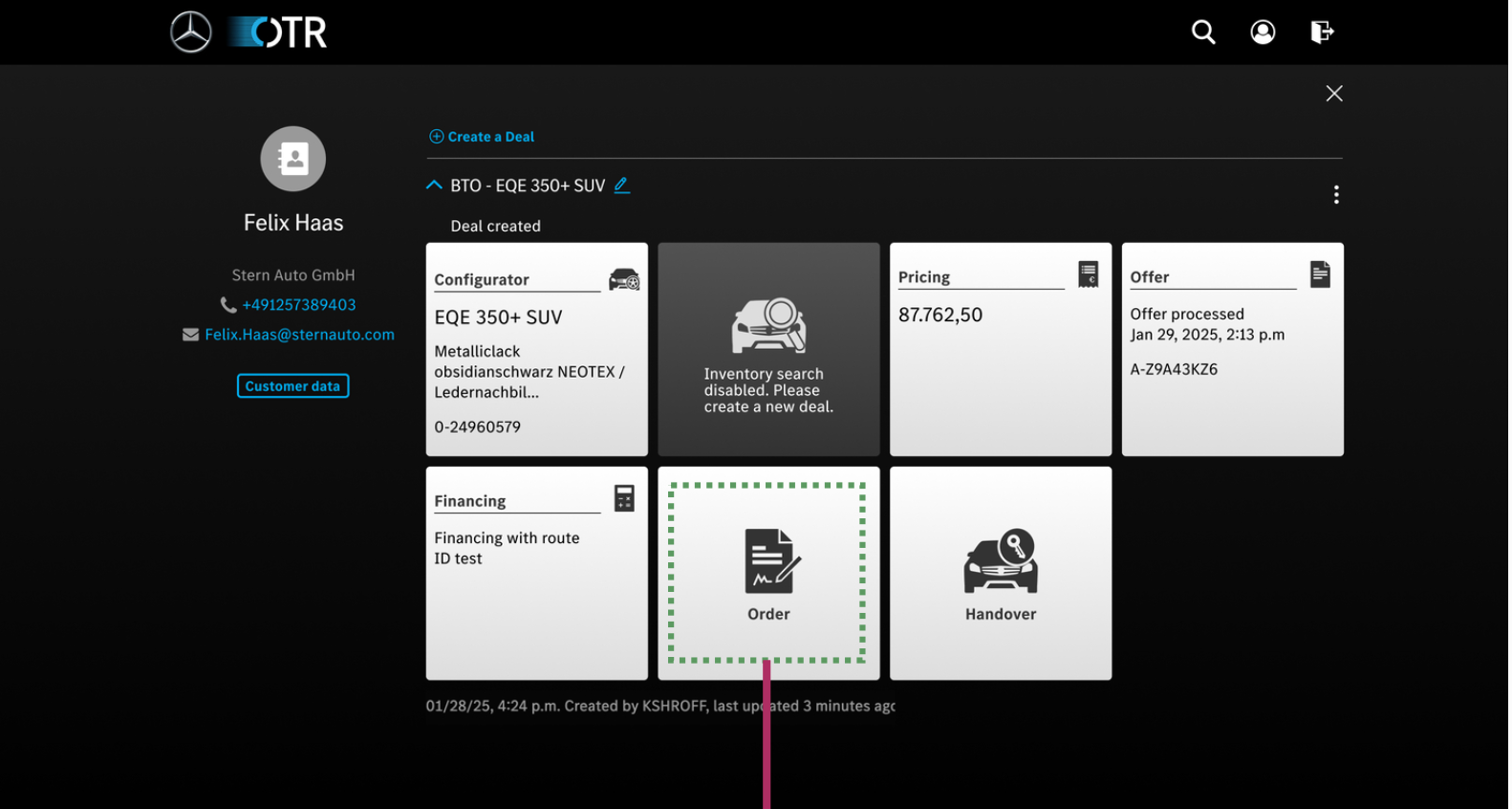
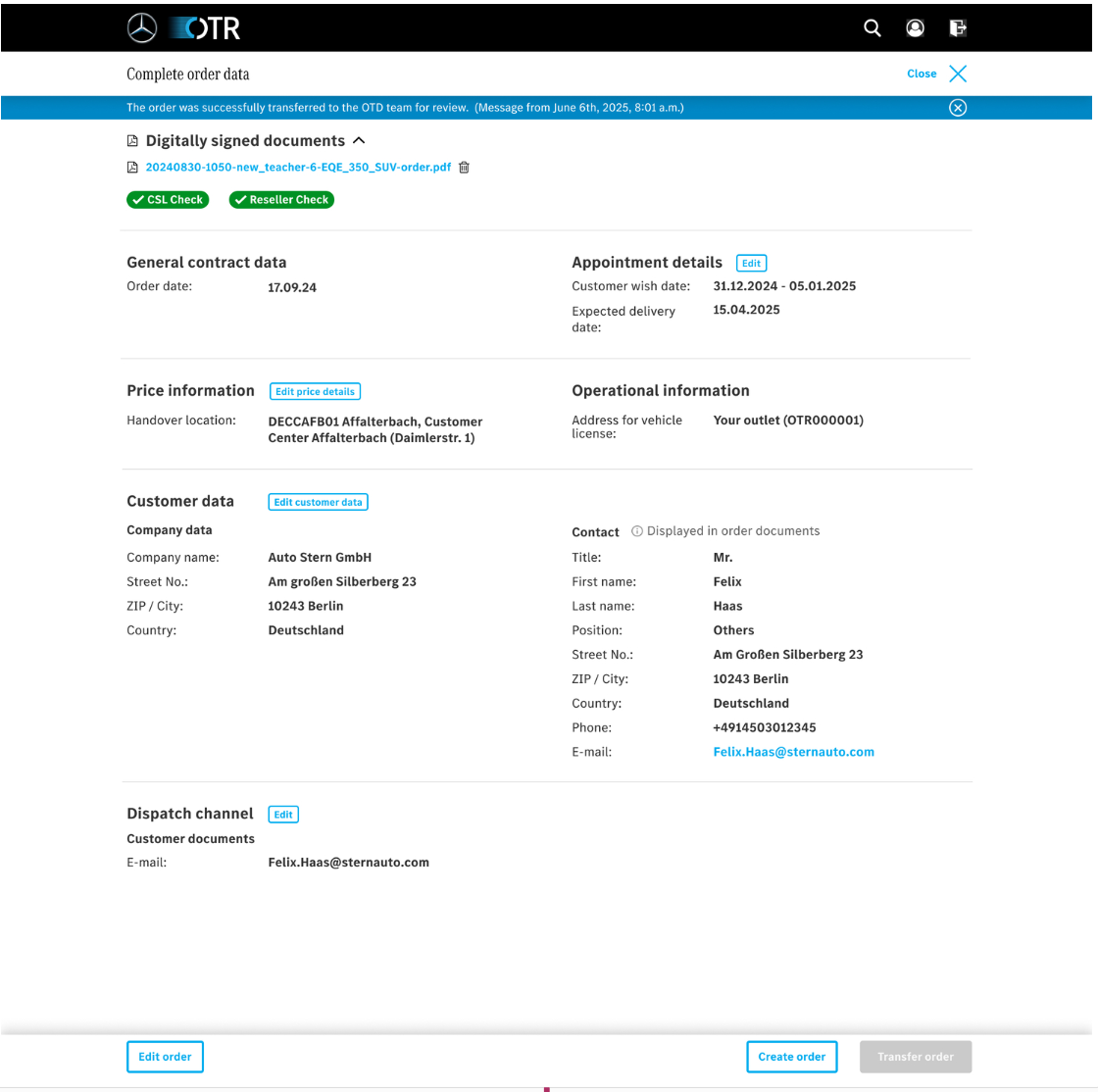
Manual Data Input: Every field, from "Order date" to "E-Mail," requires explicit human input. This is not only prone to error but also adds unnecessary "work" to the user, taxing cognitive load. For example, image_1.png shows customer data already exists; forcing its manual entry in image_0.png is an anti-pattern.
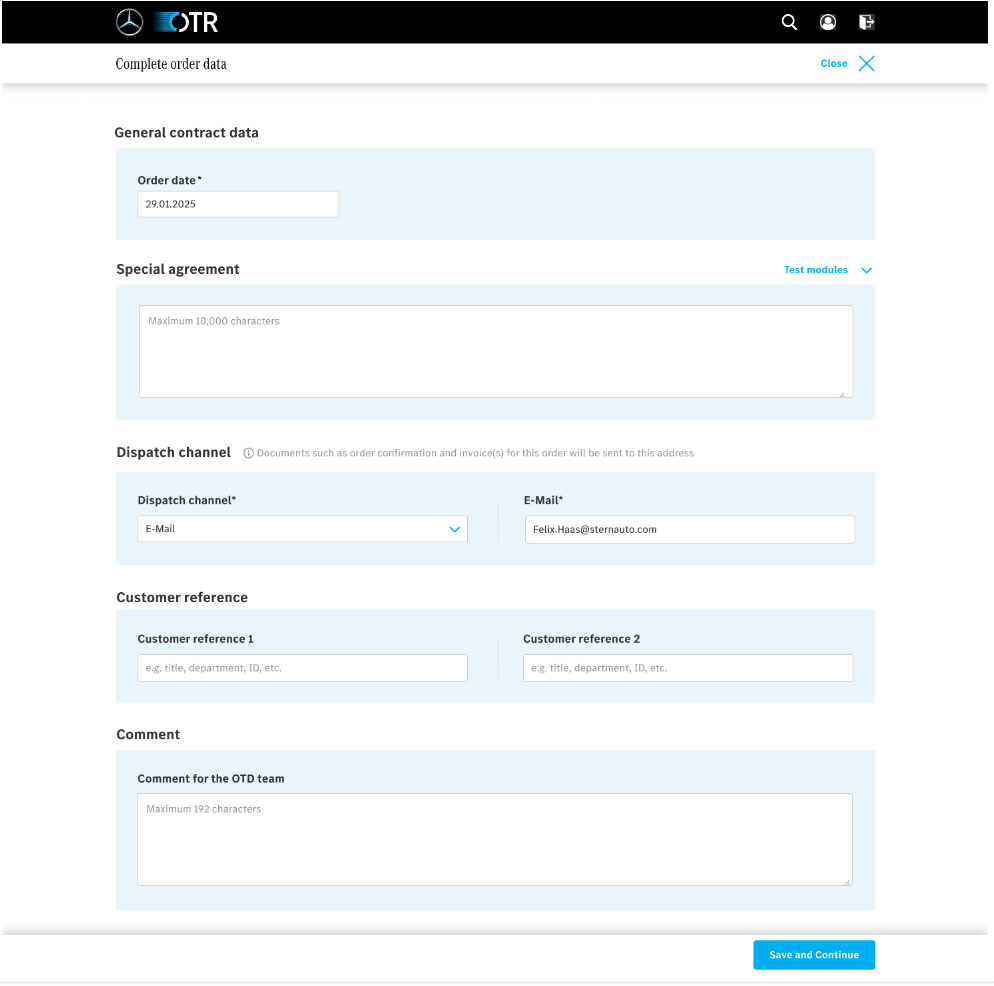
Lack of System-Level Awareness: The system cannot proactively validate data or check external dependencies. It is a passive recipient of data, not an active participant in the workflow. The only system feedback is passive: "Test modules" dropdown, static text areas.
Binary States: The form has no understanding of nuance or context. It is either incomplete or complete. This binary logic cannot handle complex, probabilistically determined statuses necessary for AI systems.
The Research on Strategic Shift: From Passive UX to Agentic
Our design objective was not simply to "make a better form." It was to propose solutions to reduce time gaps and increase clarity. As a lead on complex systems, I pivoted the strategy from Deterministic Forms to Agentic MX management.
Design Process: Turn Ambiguity into RealityI led a series of workshops and design sprints, collaborating with Product Owners, Business Analysts, and AI Engineers to move from a highly fragmented system to a stable vision.
Stakeholder Interviews & Workflow Mapping: Conducted deep-dive interviews with Sales, Pulse, and OTD teams to map the friction points.
Bottleneck Identification: We traced phase transitions and identified specific nodes where communication "Time Gaps" occurred—typically during data validation (like validating digitally signed documents).
Rapid Prototyping: Transitioned from manual wireframes to high-fidelity agentic hub concepts, leveraging AI tools like Figma, Relume and Midjourney to accelerate visual concepting and speed-to-market.
Tool Used: Figma, Relume ( Note: Design Replica's made for portfolio purposes)
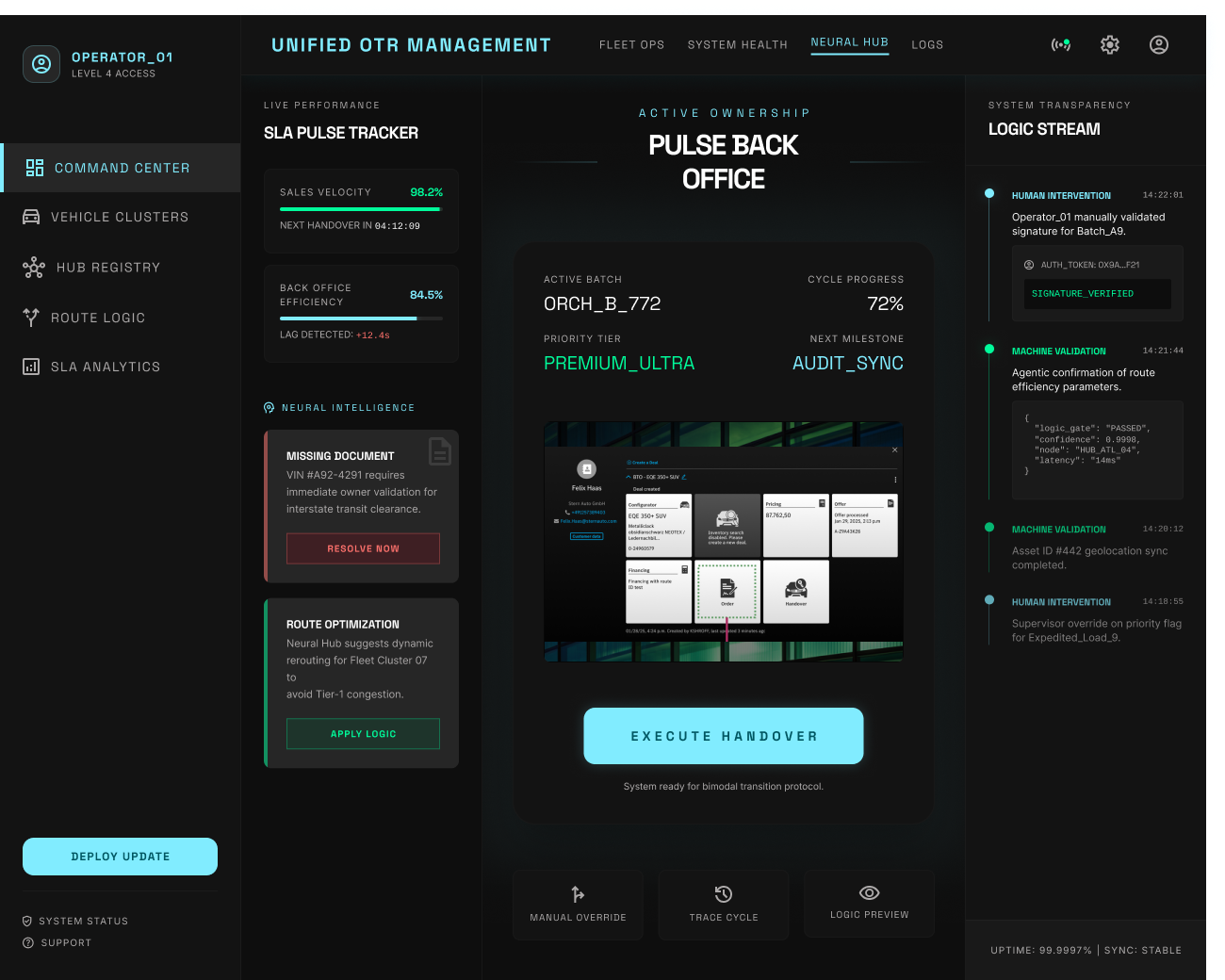
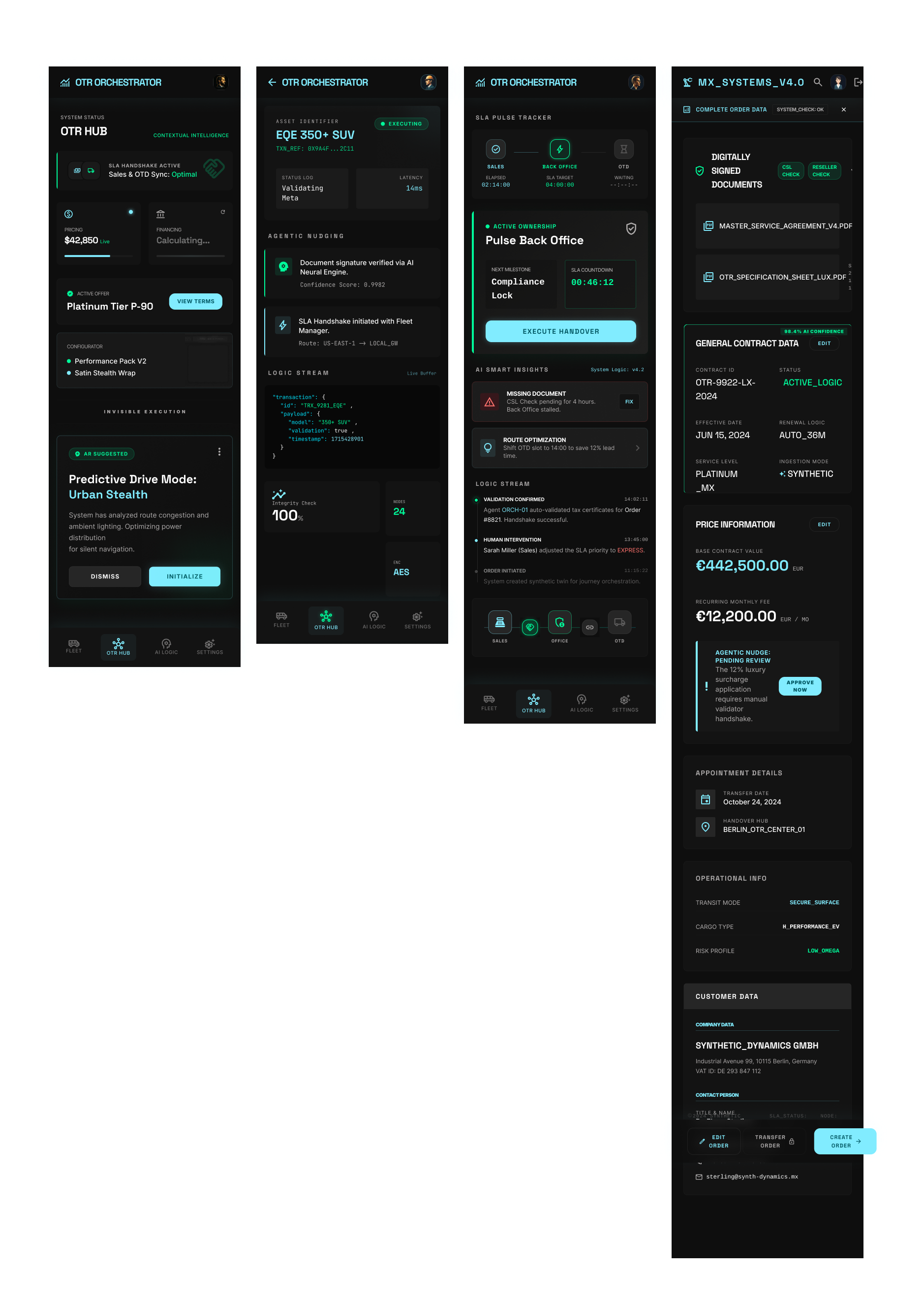
The Solution: The OTR Intelligence Hub
AI-Native Data Ingestion: The system ingests digitally signed documents
Probabilistic Status Indicators: The green dotted outline around the "Order" card is more than a design choice. It is a visual representation of the system’s high SLA indicator confidence.
Agentic Nudging: Instead of passive notifications (banners, emails), we implemented system-level nudges. When a phase handoff is pending human review, the AI doesn't just send an email.
Measuring Success (Projected Impact)
Reduction in phase transition "Time Gaps"
Decrease in back-and-forth manual communication
Lift in positive client sentiment and relationship stability
What I've been doing best
OTR Design Vision
- Mission to achieve the best OTR we can design, based on usability & design practices.
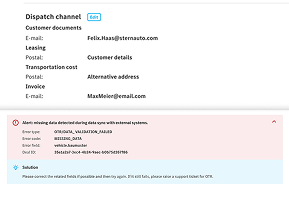
Document Dipatch Channel
- To reduce user friction and ensure successful order submissions, we need to enhance the dispatch flow experience, particularly where it intersects with financing selection andbackend sync.
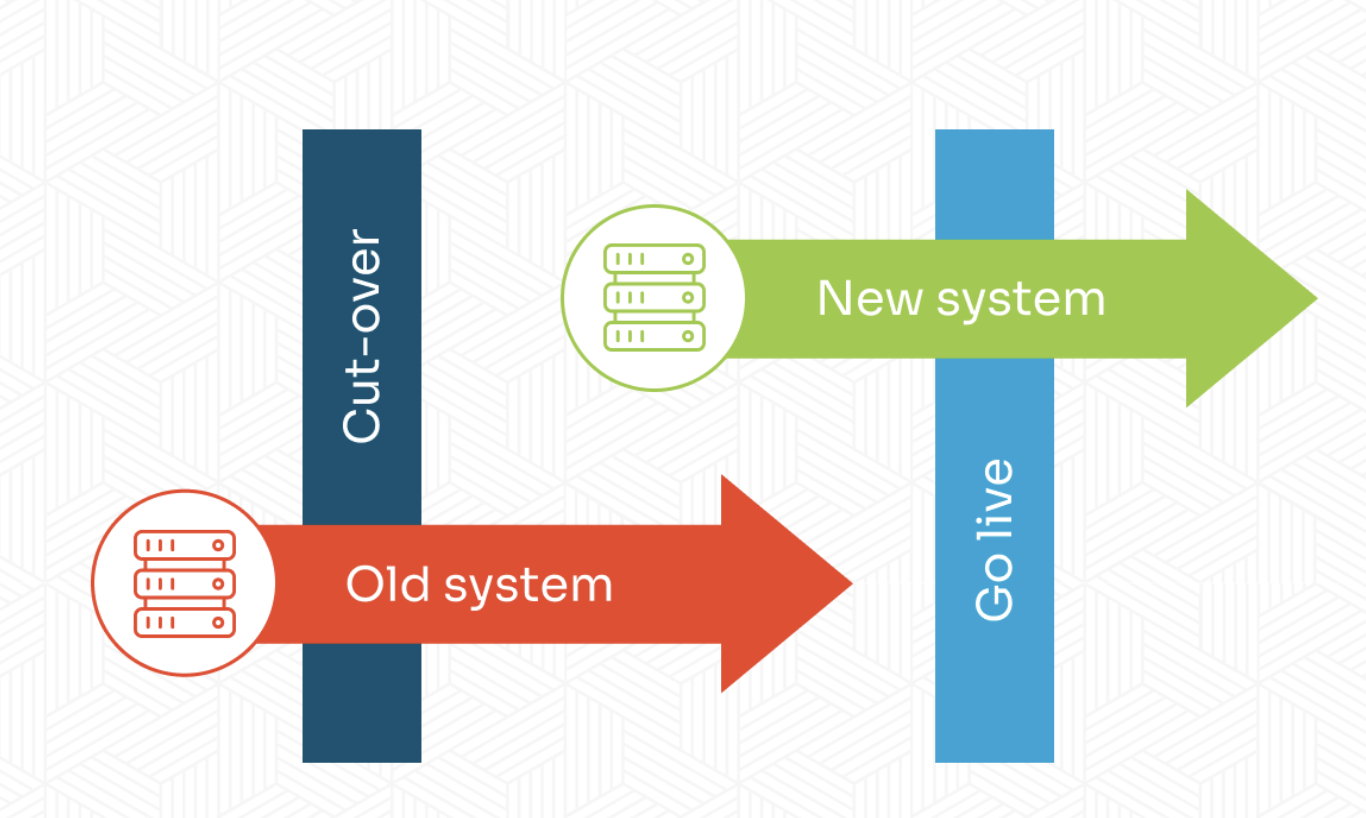
VDS Migration
- Components gap analysis and effort estimation were done for migration from MBUX to VDS and started the redesign with VDS components
What clients say

" Your Dedication and Impact has helped us turn things around. We appreciate you for bringing this enormous energy and intelligence to the table and turning things positive and possible"
Jeshurun Devendraraj, Product Owner (MB_OTR_POETS)